Understanding Traditional Gutters
Traditional gutters, also known as sectional gutters, have served homeowners for decades as the standard rainwater management solution. These systems consist of pre-cut sections, typically ranging from 10 to 22 feet in length, that installers connect together using fasteners, sealants, and corner pieces to form a complete drainage system around your roofline.
The construction process involves measuring your roofline, cutting standard gutter sections to fit, and joining them with slip connectors or rivets. Each seam requires careful sealing to prevent leaks, and the system attaches to your fascia board through brackets spaced every 24 to 36 inches. This modular approach offers flexibility during installation and makes repairs straightforward when damage occurs to a single section.
Traditional gutters come in three primary materials, each with distinct characteristics. Aluminum remains the most popular choice, offering corrosion resistance and lightweight durability at moderate costs. Steel gutters provide superior strength for homes in areas with heavy snow loads or significant tree coverage, though they require protective coatings to resist rust in Georgia’s humid climate. Vinyl gutters represent the budget option, appealing to cost-conscious homeowners, but they become brittle over time, especially during North Georgia’s occasional winter freezes and hot summer sun exposure.
Cost considerations for traditional gutter systems typically range from $5 to $10 per linear foot installed, depending on material selection and regional labor rates. A standard 150-foot installation on an average home runs between $750 and $1,500, making this option accessible for homeowners working within tighter budgets or managing rental properties where initial investment matters more than long-term performance.
Durability varies significantly by material and maintenance habits. In Georgia’s climate, characterized by high humidity, seasonal storms, and abundant pine and oak trees, traditional aluminum gutters last 15 to 20 years with regular cleaning and minor repairs. The seams represent the weakest points in these systems, prone to separation during heavy rainfall or when clogged gutters create weight stress. Homeowners in Hall County and surrounding areas often notice seam failures after severe thunderstorms, particularly during spring and late summer when rainfall intensity peaks.
The Seamless Gutter Advantage
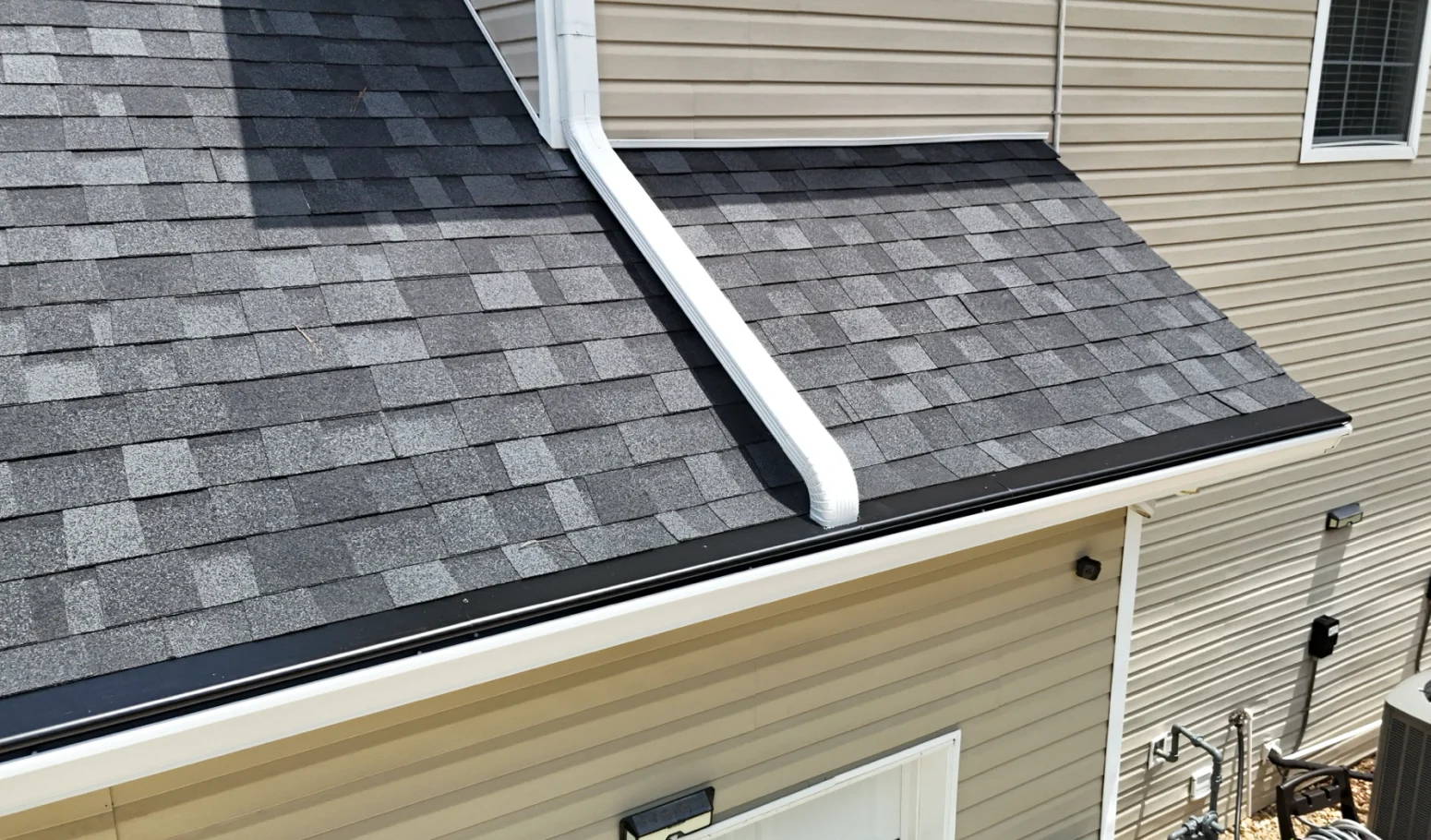
Seamless gutters revolutionized residential drainage when they entered the mainstream market, addressing the fundamental weakness of traditional systems: the seams. Unlike sectional gutters assembled from pre-cut pieces, seamless gutters are custom-formed on-site using specialized equipment that creates continuous gutter runs matching your home’s exact measurements, with seams appearing only at inside and outside corners.
The construction method requires a portable gutter machine, typically mounted on a trailer, that feeds flat metal coil stock through rollers that shape it into finished gutter profiles. Installers measure each roofline section precisely, then form gutters to exact lengths, eliminating unnecessary joints. This process demands greater skill and equipment investment than traditional installation, explaining the higher labor component in seamless gutter pricing. The result is a custom-fitted system with 80 to 90 percent fewer seams than sectional alternatives.
Material options mirror those available for traditional gutters, with aluminum dominating the seamless market due to its formability and corrosion resistance. Copper seamless gutters serve high-end homes seeking distinctive aesthetics and decades-long lifespans, while steel remains available for applications requiring maximum strength. The seamless construction method works particularly well with aluminum, which accepts custom color finishes that integrate with your home’s exterior palette and resist Georgia’s intense summer UV exposure.
The installation process delivers multiple long-term benefits that justify the initial cost premium. Fewer seams mean fewer potential leak points, dramatically reducing the maintenance burden and water damage risk. When gutters function properly, they protect your foundation, prevent soil erosion around your home, and safeguard landscaping investments from concentrated water flow. Seamless systems also present cleaner visual lines that enhance curb appeal, a consideration that matters during home sales in competitive markets across Gwinnett and Fulton counties.
Initial costs for seamless gutters typically range from $8 to $15 per linear foot installed, reflecting the specialized equipment and skilled labor required. That same 150-foot installation that costs $750 to $1,500 with traditional gutters runs $1,200 to $2,250 for seamless alternatives. The price difference narrows when comparing premium traditional materials to standard seamless aluminum, and the gap closes further when factoring in reduced maintenance expenses and longer functional lifespans. Homeowners who plan to remain in their residences for 10 or more years often find seamless systems deliver superior value despite higher upfront investment.
Cost Breakdown: Initial Installation
Understanding the complete cost picture requires breaking down installation expenses into material and labor components, then examining how variables like home size, gutter style, and regional market conditions affect final pricing. Georgia homeowners benefit from competitive pricing due to strong contractor availability across metro Atlanta and surrounding regions, though rural areas sometimes see modest premiums for travel time.
Material costs for traditional vinyl gutters start around $2 to $3 per linear foot for the gutters themselves, plus downspouts, elbows, end caps, and mounting hardware. Aluminum sections run $3 to $5 per linear foot, while steel ranges from $4 to $6. Labor adds $3 to $5 per linear foot, encompassing removal of old gutters if necessary, installation of new sections with proper pitch for drainage, and final sealing of all joints. A typical single-story home with 150 linear feet of gutters requires four to six hours of work for a two-person crew, translating to labor costs between $450 and $750 depending on complexity and access challenges.
Seamless gutter material costs sit higher due to the custom fabrication process, ranging from $4 to $8 per linear foot for aluminum, with premium colors or heavier-gauge metal pushing toward the upper end. Copper seamless gutters command $15 to $25 per linear foot in material costs alone, reserved for luxury installations or historic home restorations. Labor costs for seamless installation run $4 to $7 per linear foot, reflecting the specialized skills and equipment operation required. The same 150-foot home sees labor charges between $600 and $1,050, with the higher investment delivering a system requiring significantly less maintenance attention over its lifespan.
Additional factors influence final costs beyond basic material and labor rates. Two-story homes require scaffolding or lift equipment, adding $200 to $500 to project costs. Homes with complex rooflines featuring multiple valleys, dormers, or architectural details need extra time and materials, increasing both labor hours and the quantity of corners and fittings. Gutter installation services in North Georgia also account for fascia board condition, since rotted or damaged fascia requires repair or replacement before new gutters can be securely mounted, sometimes adding $300 to $800 to unexpected project costs.
Geographic pricing variations within Georgia remain relatively modest. Metro Atlanta markets including Gwinnett, Fulton, Cobb, and DeKalb counties see the most competitive pricing due to contractor density. Smaller markets like Athens, Gainesville, and surrounding rural counties may see 5 to 15 percent higher rates, though the difference rarely exceeds $200 to $300 on typical residential projects. Seasonal demand affects pricing as well, with spring and fall representing peak installation seasons when contractors maintain full schedules and offer fewer discounts compared to slower winter and mid-summer periods.
Making the Right Choice for Your Home
The true cost comparison between seamless and traditional gutters emerges only when examining total ownership expenses across a gutter system’s functional lifespan. Initial installation represents just the beginning of a long-term financial relationship that includes routine maintenance, periodic repairs, and eventual replacement.
Traditional gutters demand more frequent maintenance attention due to their seamed construction. Georgia homeowners typically need professional cleaning twice annually, in late spring after pollen season and again in late fall after leaves drop. Each cleaning runs $100 to $200 for average homes, totaling $200 to $400 yearly. Seam repairs become necessary every three to five years as sealants deteriorate and thermal expansion stresses joints, costing $150 to $300 per repair visit. Over a 15-year lifespan, traditional gutters accumulate $3,000 to $6,000 in cleaning costs plus $750 to $1,500 in seam repairs, adding $3,750 to $7,500 to the original installation investment.
Seamless gutters reduce maintenance frequency and severity due to fewer leak points and better water flow characteristics. The same twice-annual cleaning schedule applies, but the absence of seam-related clogs often allows homeowners to extend cleaning intervals slightly, particularly on homes with minimal tree coverage. More significantly, seam repairs become rare or nonexistent, eliminating the $150 to $300 repair visits that traditional systems require. Over a 20 to 25-year lifespan typical for quality seamless aluminum installations, maintenance costs total $4,000 to $10,000 in cleaning expenses with minimal repair needs, but this amount spreads across a longer service period.
Calculating total cost of ownership reveals the financial advantage of seamless systems for long-term homeowners. A traditional aluminum gutter system costing $1,000 initially, plus $5,625 in maintenance and repairs over 15 years, totals $6,625 before requiring replacement. A seamless system costing $1,700 initially, plus $6,000 in maintenance over 20 years, totals $7,700 but delivers five additional years of service. Annualized costs come to $442 for traditional gutters versus $385 for seamless systems, a savings of $57 yearly that compounds over multiple replacement cycles.
North Georgia climate factors amplify these differences. The region’s heavy spring pollen loads from pine, oak, and sweetgum trees create dense accumulations that trap moisture and accelerate seam deterioration in traditional gutters. Summer thunderstorms deliver high-intensity rainfall that tests gutter capacity and stresses weak seams. Winter freezes, though infrequent, cause expansion damage that loosens fasteners and opens seams. Homeowners committed to roof repair services and exterior maintenance recognize that properly functioning gutters protect roof edges, fascia boards, and foundations from water damage costing thousands to repair.
Decision factors extend beyond pure cost analysis to include individual circumstances and priorities. Homeowners planning to sell within five years may prefer traditional gutters to minimize upfront investment, accepting higher maintenance needs as acceptable during short ownership periods. Those in homes they plan to occupy for decades benefit more from seamless installations that reduce ongoing attention and deliver better long-term performance. Budget constraints matter as well, since the $500 to $1,000 difference between systems can be significant for households managing multiple home improvement priorities simultaneously. Working with experienced gutter installation services helps clarify which option aligns best with your specific situation, maintenance tolerance, and financial planning.
Factors to Consider When Choosing a Gutter System
Selecting between seamless and traditional gutters ultimately depends on balancing several key factors specific to your property and priorities. Homeowners must weigh upfront budget constraints against long-term value, consider the architectural characteristics of their residence, and honestly assess their willingness to commit to ongoing maintenance schedules.
Budget considerations extend beyond the initial check you write to the installer. If your immediate financial situation requires minimizing upfront costs, traditional gutters offer a viable entry point into quality rainwater management. This option works particularly well for rental properties, homes scheduled for near-term renovation, or situations where capital must be allocated across multiple urgent home improvements simultaneously. However, homeowners planning to remain in their residence for five years or longer typically recover the additional investment in seamless systems through reduced maintenance costs and fewer emergency repairs.
Climate factors play a decisive role in the Jefferson area and surrounding North Georgia counties. Properties surrounded by mature hardwoods face substantially higher debris loads during autumn months, increasing the frequency of required cleanings for both systems but particularly impacting traditional gutters where leaves accumulate at seam joints. Homes in areas experiencing occasional ice events may benefit from the structural integrity of seamless aluminum, which handles thermal expansion and contraction with fewer failure points than sectional systems.
Architectural considerations matter as well. Complex rooflines with multiple valleys, dormers, or unusual angles increase installation complexity and cost for both systems, though seamless gutters maintain their leak-resistance advantage even on complicated structures. Historic homes may have specific aesthetic requirements that favor the classic appearance of traditional copper or steel sections, while contemporary designs often pair beautifully with the clean lines of seamless aluminum in custom colors.
Maintenance tolerance represents perhaps the most personal decision factor. Homeowners who enjoy weekend property care and possess the physical capability to safely access their rooflines may feel comfortable with the increased maintenance demands of traditional gutters. Conversely, those with limited time, mobility concerns, or simply other priorities often find the lower maintenance requirements of seamless systems worth every dollar of the initial premium.
For properties in Barrow County, Hall County, Gwinnett County, and throughout the North Georgia service area, gutter installation services should account for regional rainfall patterns and the specific drainage challenges your lot presents. Proper installation quality matters more than system type for ultimate performance, a poorly installed seamless system will underperform a correctly installed traditional setup.
When your home requires new gutters or replacement of failing systems, taking time to evaluate both options against your specific circumstances produces better long-term outcomes than defaulting to the lowest bid. Consider scheduling a property assessment to examine your roofline, discuss material options, and develop a realistic understanding of how each system would perform given your home’s unique characteristics. Whether you ultimately select seamless or traditional gutters, investing in quality installation and committing to appropriate maintenance schedules protects your property’s foundation, landscaping, and structural integrity for decades to come. Contact our team to discuss which gutter solution best fits your home and budget.